A version of this post is also available in Spanish.
Not too much to say beyond the title, just that these books made me feel things and left me thinking and I know that’s the most generic thing somebody can say about reading but who cares, I read to be happy and to suffer and to cry, I do it for myself.
So here goes nothing!
Mira a Esa Chica (Look at That Girl) – Cristina Aráujo Gámir
When I wrote my annual feminist blog post, I mentioned this book, which I still think about from time to time. It’s hard to read because it challenges the ideas we might have about who a “perfect victim” is. Miriam is a teenager who sometimes finds pleasure in drunkenly kissing unknown guys at parties or who laughs at misogynistic jokes just to be part of something. It’s based on the real case of La Manada in Spain and it’s told from different points of view. Mira a Esa Chica is divided in two, like the life of any person who’s been the victim of sexual violence: the before and the after.
It really is a tough read. Mainly because it’s hard to read it and not think that I may have been that person who doesn’t understand, who isn’t supportive enough, who has made harsh judgments without knowing it all. This book makes it clear that we are ALL part of the problem.
In short: it destroyed me. It made me cry. It made me angry.
And what’s even tougher is that even though Cristina Aráujo is writing about something so brutal, it’s written in a way that’s even beautiful sometimes, which made my heart break even more.
👀 Recommended for: one of those days when you need just one more reason to set the world on fire.
Los Sorrentinos – Virginia Higa
I don’t always read sad things, Los Sorrentinos is proof of that. I obviously didn’t know that sorrentinos are a type of pasta famous in Argentina before reading the novel, but now I want to try them, of course. Los Sorrentinos is the story about this famous Argentinian dish but also about the family of Italian immigrants who created it, the story of Chiche Vespolini, the relationships between everyone in the family, their fights, their secrets, their rivalries. It’s the story of a normal family, but Virginia Higa makes it special.
My favorite part of the book is that they talk about the familect of the Vespolinis. From the first pages, you start discovering words like catrosha, papocchia, sciaquada, or mishadura, all explained in a really funny way. After some chapters, you already know what it means for a person to be a catrosho or who the sciaquada of the family is. By the end, you’re saying mishadura along with the characters. Lovely!
It’s not the most revealing, dramatic, or intense story, and probably not something that will change your life but I really enjoyed reading about a family and laughing and thinking how we all have these kinds of family stories. I always think it would be nice (or scary) to know them all.
👀 Recommended for: people with crazy families who miss their crazy families.
Umami – Laia Jufresa
Reviews of Umami say that it’s a “well done” and “well written” book, from an author who thought her characters through and didn’t leave out anything important out of the story. I started reading with those expectations, I expected almost nothing and it gave me everything.
It’s a short novel that’s told from the point of view of different characters (something quite common in what I read and I’m just realizing it). Umami is about a group of people who live close to each other in Distrito Federal (now Ciudad de México). The people who live there tell us their stories and through the narration of each character, we start getting to know all the neighbors.
Their stories are about pain, longing, grief, all those things that were and aren’t anymore. And I know that it sounds absolutely depressing and it is in some parts but it’s also about hope and laugh and love and nice things. Overall, it’s about how we need each other, how communities are important and necessary, and how being there for others can save us, too.
👀 Recommended for: those days when your neighbor is being terrible but you need to remember that one time when they helped you with something really small and important.
Imagina Que Rompes Todo (Imagine You Break Everything) – Lina Munar Guevara
I’m a sucker for a good coming of age in any form and I loved this one. Melissa is about to graduate from what I guess is high school in Colombia but in order to do that, she needs to get some money to repair a printer she broke at school. In the middle of this drama (because it is a drama for her), Melissa’s mom makes an appearance and wants to spend a weekend with her. During this weekend, we understand why Melissa lives with her aunt, why there’s distance between her and her mom, and why destroying a printer was an almost normal reaction for Melissa.
Sometimes I read things where teenagers speak and react like adults (in fact, Umami has a little bit of that, little girls are small adults) and it almost always disappoints me. It’s like watching Dawson’s Creek, where did they learn to talk about their feelings like that?! Anyway, in Imagina Que Rompes Todo, Melissa is a normal teenager who reacts like a teenager. Her problems are teenager problems (well, maybe not ALL teenagers have those problems but still), her ideas, the way she sees the world, the way she tells us about her life. It’s refreshing to read something so honest! Lina Munar has the ability to tell us a great story in an interesting way without being one of those authors who talk with big and exaggerated words. It’s colloquial, informal, and yet, very well executed. That’s what makes it special.
Plus, the cover has cats.
👀Recommended for: those days when you need to remember that you’ve grown and that you’re doing better and that everything turned out great for you.
El Cuerpo de Cristo (The Body of Christ) – Bea Lema
I looked for this book EVERYWHERE until I found it on Amazon Spain in the shop of an Italian bookstore (something very Todo Se Transforma, if you ask me). I wanted to have the physical book because reading it digitally would’ve been a sin, to stay on the topic of the book. The message is the medium and the medium is the message here. It’s a true beauty.
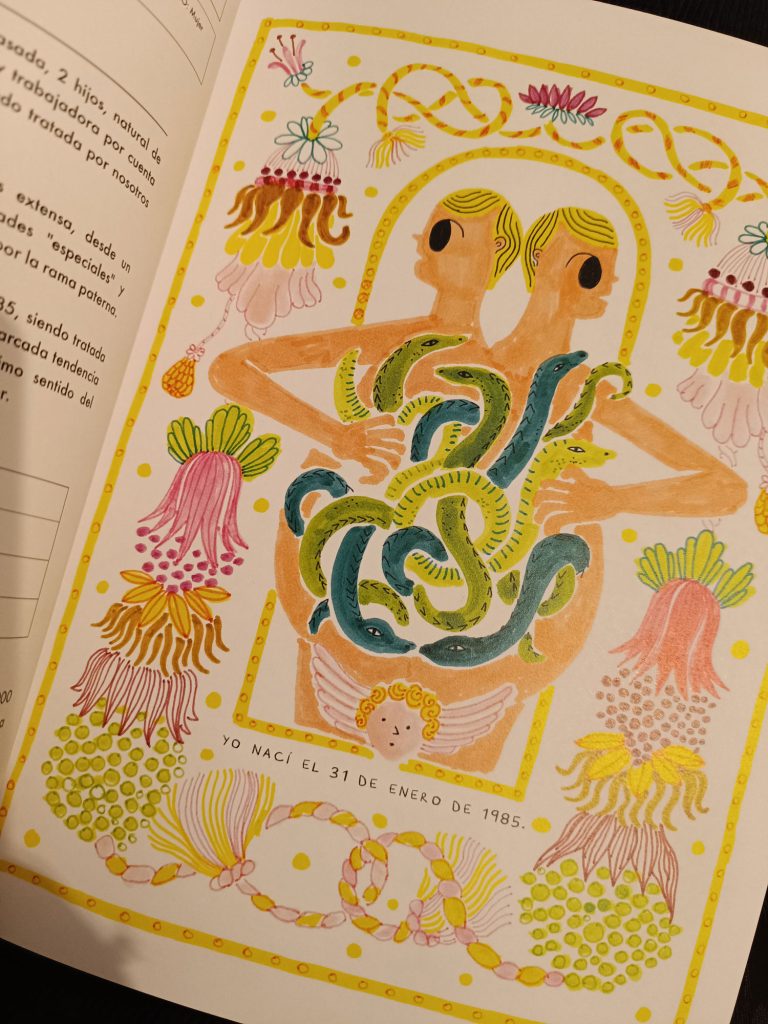
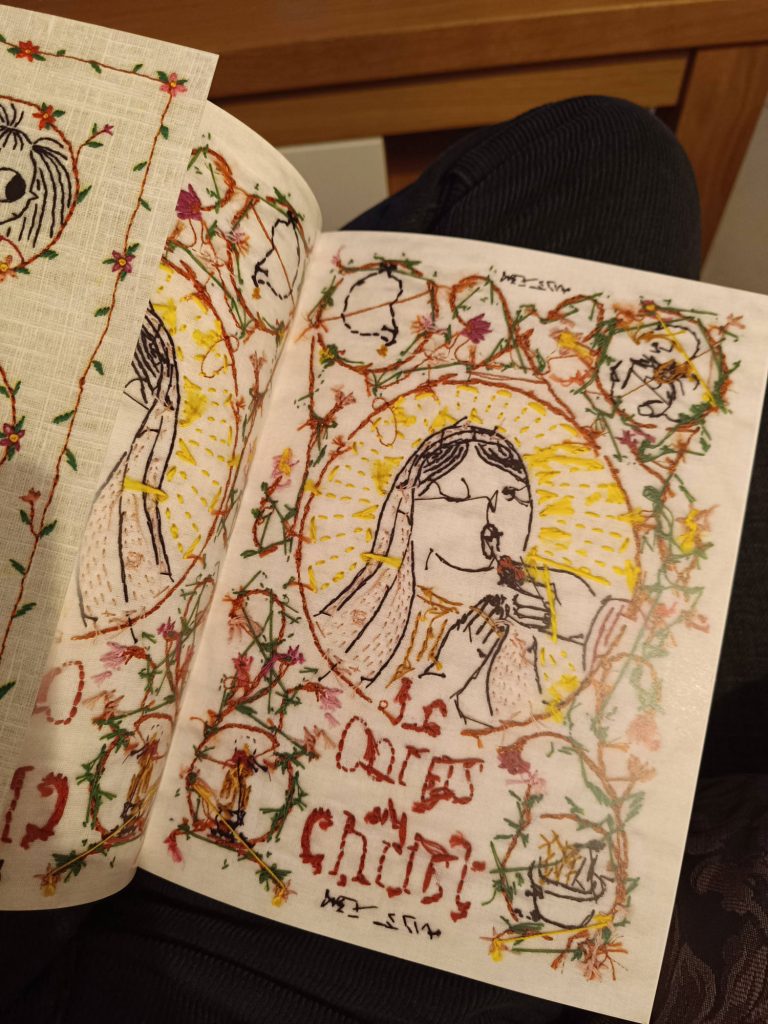
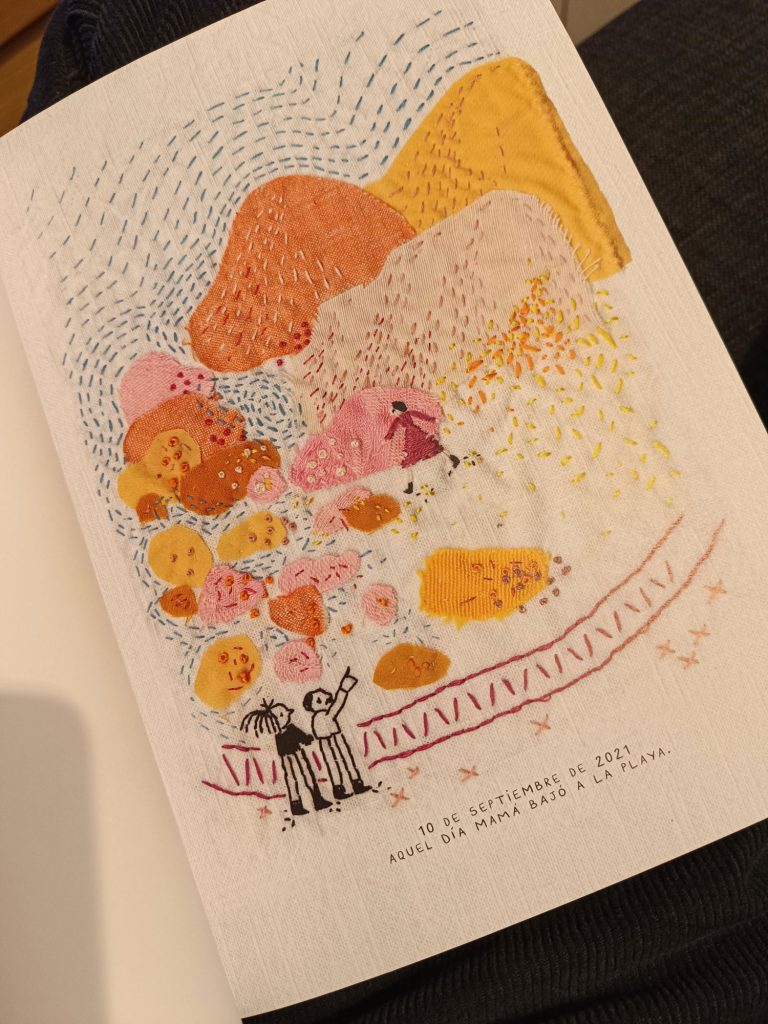
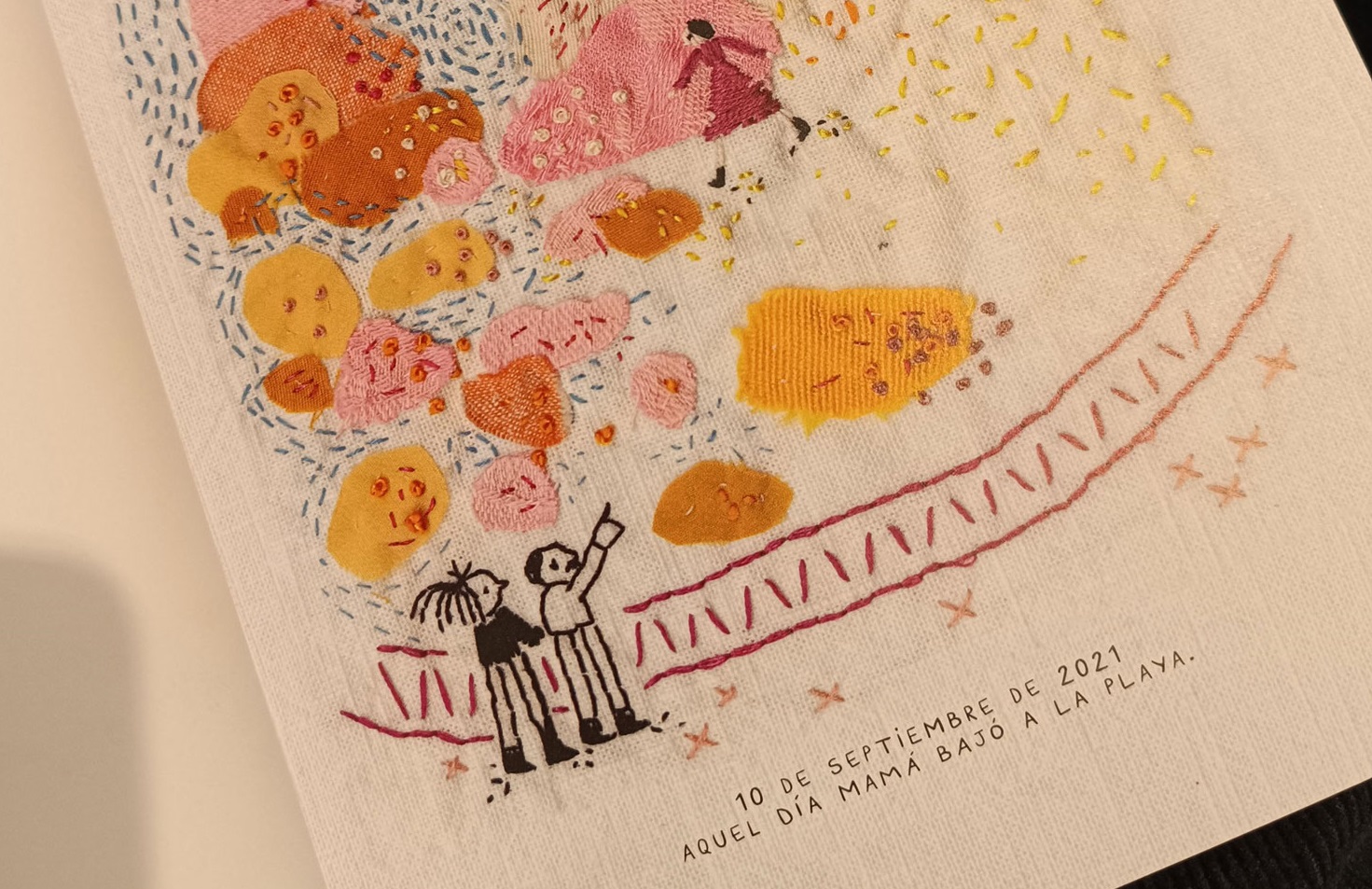
Bea Lema tells us her story, how she grew up with a very religious mom who had an undiagnosed mental disorder. Being scared, not understanding, feeling guilt, having moments of happiness, everything is told through illustrations and EMBROIDERED works of art. Honestly, I can’t imagine how it was to create this book, how Bea Lema planned each page, the hours she spent embroidering and thinking about her story.
But as said before, it’s not only about the medium, the message is also important. Because maybe those hours Bea Lema spent embroidering, drawing, and writing, were her own way of coming to terms with the story of her mom, which is her own story at the same time.
I loved this book because it’s about forgiveness and love because no matter what happened, she understands everything now.
👀 Recommended for: those days when you need a reason to send a message to your mom and tell her you were thinking about her.
Brooklyn (+Long Island) – Colm Tóibín
Since I read it the first time, it went straight to my mental list of favorite books. I re-read it this year and I liked it just like the first time, maybe even more. It’s the story of Eilis, who leaves her small Irish town to move to New York (Brooklyn, specifically). We follow her through her process of missing, adapting, coming, and going. I cried with her, celebrated with her, and identified with her. It’s a very accurate and beautiful portrayal of how it is to feel out of place and how it is to try to build a new life away from everything you know.
What I really love about Colm Tóibín is his ability to tell us things without saying them. He doesn’t need to give all the details or go deep into the thoughts of the characters (unlike the next book on this list). It’s like reading about moments in their life and building a puzzle, assuming things, imagining possibilities.
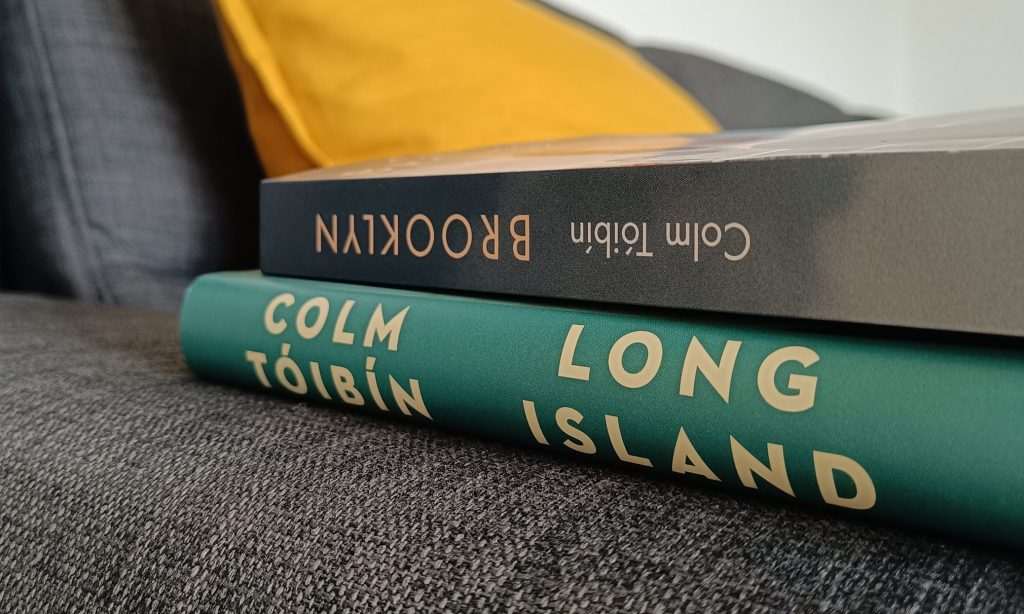
And, as an honorable mention, I’ll add Long Island here, the sequel of Brooklyn, also told from different points of view! It left me as frustrated as the first book haha. Not as good as Brooklyn, in my opinion, but we at least know what happened with Eilis 20 years later. (#FuckTony)
👀 Recommended for: those days where no matter how bad of a day you’re having, Eilis was having a WAY worse day in the boat on her way to Brooklyn.
Intermezzo – Sally Rooney
Yes, I’m one of those people who love Sally Rooney and I regret nothing, sorry for being so quintessentially millennial. I was her fan since I read Normal People, which made me very angry and frustrated. Now with Intermezzo, it feels like Sally Rooney has grown with me (although she’s always like 120% better than me). It’s still very her but I love seeing how her craft improves with each book. God, give me like 1% of her talent, please!
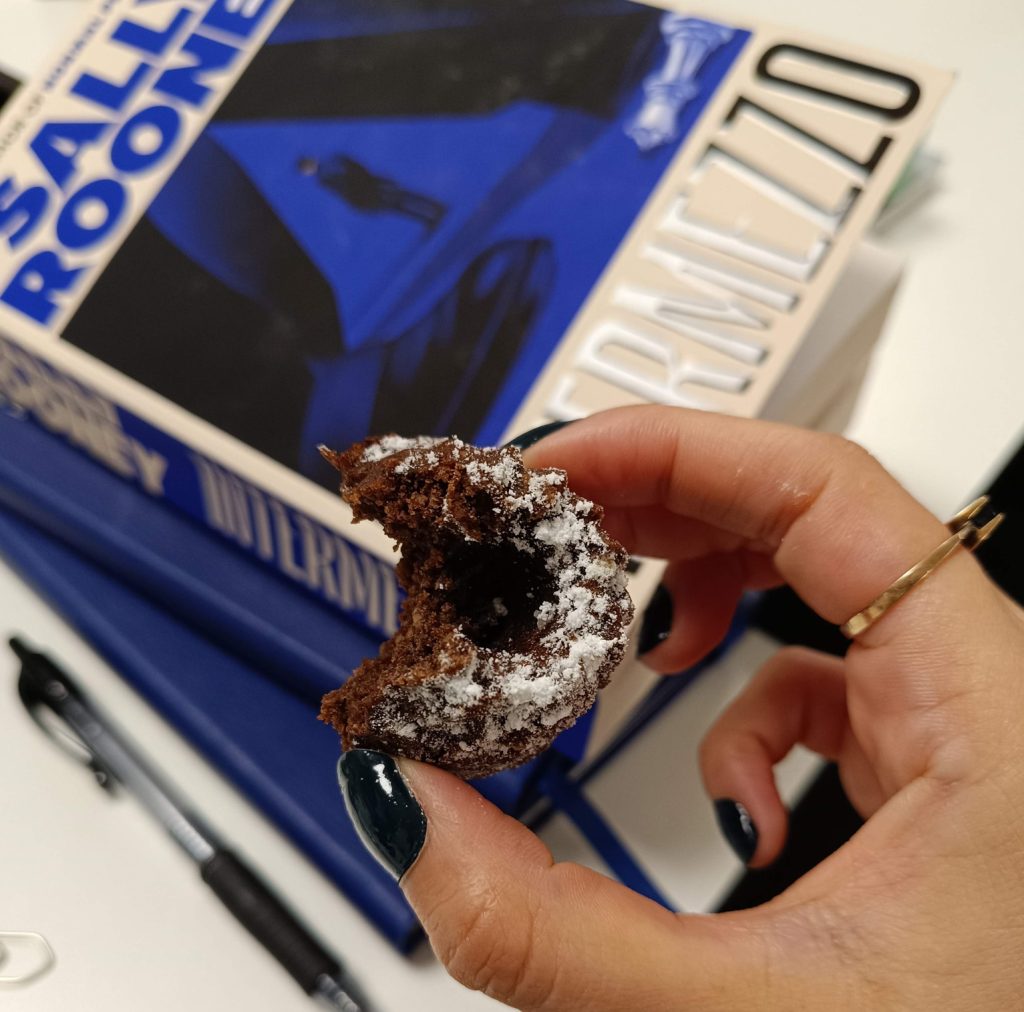
Intermezzo is about two siblings, Peter and Ivan, and women in their orbit who do all the emotional work needed and maybe that’s another topic so I won’t go deep into that. Peter and Ivan have just lost their father and we meet them right at that moment. The novel is told through different points of view (yes, again!) and little by little, we understand how all the pieces come together. Mainly, we see how I’m not the only person in the world who overthinks absolutely everything. It’s also about pain and grief, which also seems to be one of the topics I read about the most (also I promise it’s not on purpose and I read about other less depressing things haha).
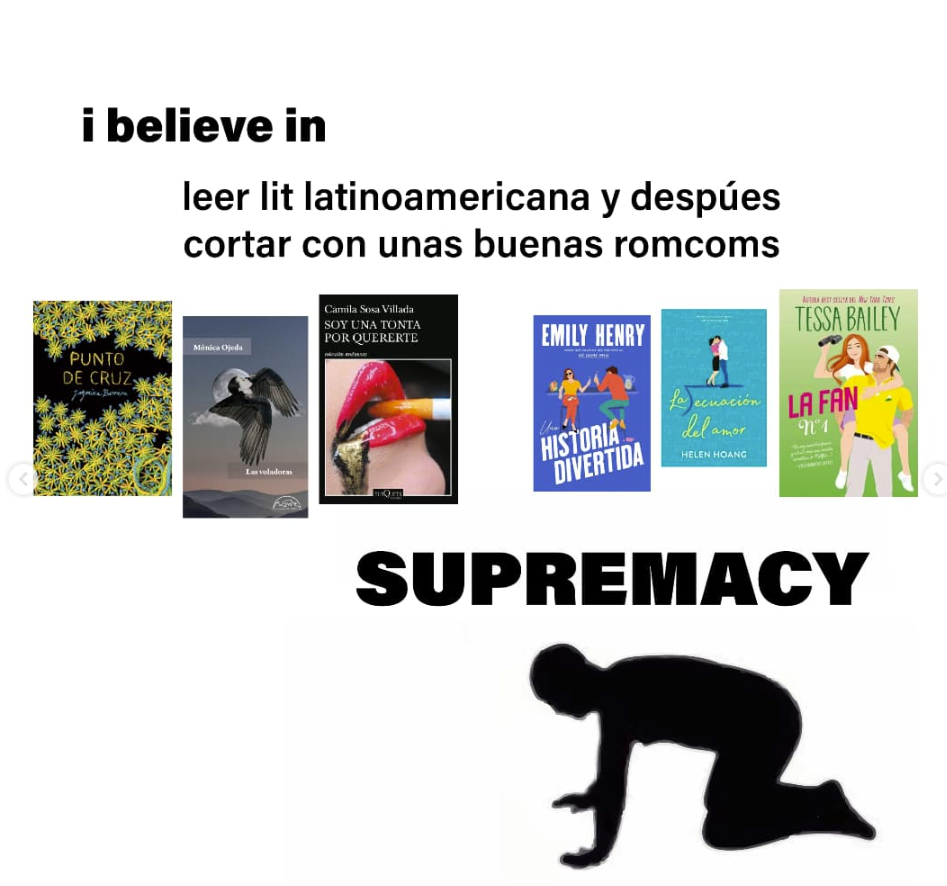
I particularly enjoyed how the characters start to understand their own lives, their relationships, and what makes them suffer or be happy by looking at their pasts through “adult” eyes. I don’t know, by the end, it seems like there’s hope and things will get better. Not everything is sadness forever, hopefully!
👀 Recommended for: chess and my fellow overthinking enthusiasts.
thanks 2024!
I already have a really long of books I want to read in 2025 so even if everything sucks in the world, reading will keep saving me, as it always has.
Leave a Reply